The Memorial is open 8:00AM-6:00 PM. The restaurant is open 11:00AM to 4:00PM and the Snack Shop is open 10:00AM to 4:00PM . Winner Ticket for motorcycle #6426

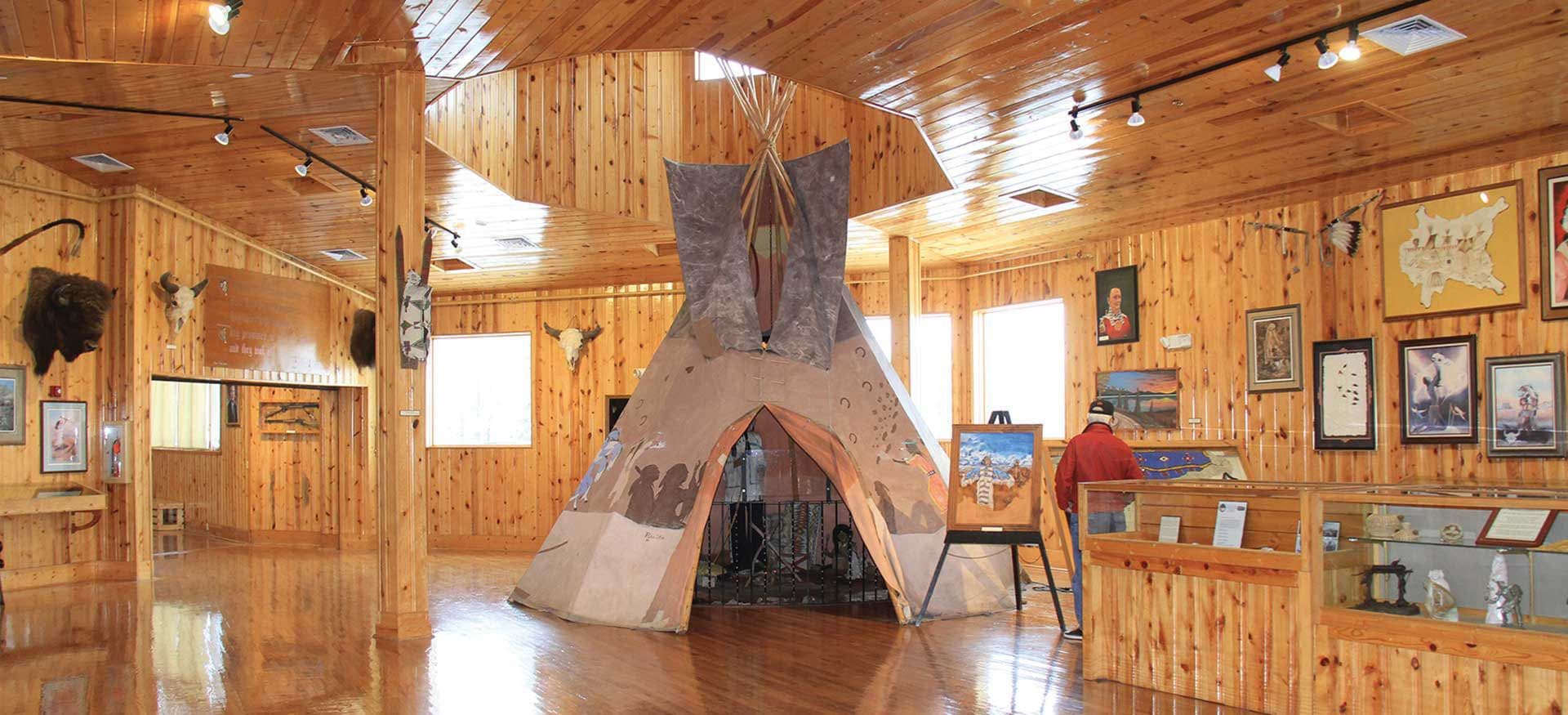
Paha Ska’s Tipi on Display at Crazy Horse Memorial
With its ease to assemble, break down, pack, and transport, the tipi was the traditional primary residence of mobile, buffalo-hunting Great Plains Tribes. While offering flexibility for movement, this structure provided shelter and stability against the harsh elements of the region. Constructed of buffalo hides before contact, the tipi’s transition from natural skins to canvas exteriors is a direct result, and an observable reflection, of the decimation and near extinction of the buffalo in the 19th century by the U.S. government.
But the tipi’s importance extends beyond its practical benefits as its significance is broader than its physical elements, serving as a material expression for Plains Indian cosmologies and worldviews, which retain their reverent relationship with nature. Accordingly, thípi is the Lakota word for “dwelling”, but more broadly encompasses concepts of active living. In other words, the tipi is regarded as much more than a place to live but is considered a living being itself that requires nourishment and attention.
This perspective offers insights as to how the tipi factored into structing Plains People’s social worlds. For example, women were primarily responsible for preparing the hides of which the tipi was constructed as well as the day-to-day care of the tipi once it was completed and in use. Men, alternatively, were often responsible for painting the tipi’s exterior as part of the finishing process that offered further protection against intangible elements. For children, the tipi remains a safe place where youngsters learn the ways of their people.
The tipi on display in the Indian Museum of North America was painted by renowned Oglala Lakota artist, Orville Francis Salway (1923 -2005), or Paha Ska as he was named by Ben Black Elk. Born near White Clay, Nebraska, Paha Ska lived most of his life in the Black Hills area, starting in Rapid City and later moving to Keystone where he sold his artwork and posed for pictures in traditional regalia. The colorful images on the Paha Ska tipi depict the intricate vision of Lakota Holy Man, Nicholas Black Elk. In many ways, Paha Ska utilizes this artwork to interpret, preserve, and share an important story of Black Elk’s spiritual vision. In addition to the tipi, many of Paha Ska’s other art works are on display throughout The Indian Museum of North America.
You are exiting the Crazy Horse Memorial® website.
Thank you for visiting our site.
You will be directed to the following website, in 10 seconds:
https://crazyhorsememorial.org/privacy-policy#do-not-sell
Click here to redirect nowYou are exiting the Crazy Horse Memorial® website.
Thank you for visiting our site.
You will be directed to the following website, in 10 seconds:
https://www.google.com/maps/dir//Crazy+Horse+Memorial,+Crazy+Horse,+SD+57730/@43.843043,-103.6322931,17966m/data=!3m1!1e3!4m17!1m7!3m6!1s0x8762cc001c5578df:0x7a29925e509a0c7!2sCrazy+Horse+Memorial!8m2!3d43.8366191!4d-103.6234038!16zL20vMDM3M3c0!4m8!1m0!1m5!1m1!1s0x8762cc001c5578df:0x7a29925e509a0c7!2m2!1d-103.6234038!2d43.8366191!3e2
Click here to redirect nowYou are exiting the Crazy Horse Memorial® website.
Thank you for visiting our site.
You will be directed to the following website, in 10 seconds:
https://www.google.com/maps/dir//Crazy+Horse+Memorial,+Crazy+Horse,+SD+57730/@43.843043,-103.6322931,17966m/data=!3m1!1e3!4m17!1m7!3m6!1s0x8762cc001c5578df:0x7a29925e509a0c7!2sCrazy+Horse+Memorial!8m2!3d43.8366191!4d-103.6234038!16zL20vMDM3M3c0!4m8!1m0!1m5!1m1!1s0x8762cc001c5578df:0x7a29925e509a0c7!2m2!1d-103.6234038!2d43.8366191!3e2
Click here to redirect nowYou are exiting the Crazy Horse Memorial® website.
Thank you for visiting our site.
You will be directed to the following website, in 10 seconds:
https://www.google.com/maps/dir//Crazy+Horse+Memorial,+Crazy+Horse,+SD+57730/@43.843043,-103.6322931,17966m/data=!3m1!1e3!4m17!1m7!3m6!1s0x8762cc001c5578df:0x7a29925e509a0c7!2sCrazy+Horse+Memorial!8m2!3d43.8366191!4d-103.6234038!16zL20vMDM3M3c0!4m8!1m0!1m5!1m1!1s0x8762cc001c5578df:0x7a29925e509a0c7!2m2!1d-103.6234038!2d43.8366191!3e2
Click here to redirect nowYou are exiting the Crazy Horse Memorial® website.
Thank you for visiting our site.
You will be directed to the following website, in 10 seconds:
tel:605-673-4681
Click here to redirect nowEMPLOYMENT & OPPORTUNITIES
Cultural Programs Applications

UNIVERSITY PROGRAMS
You are exiting the Crazy Horse Memorial® website.
Thank you for visiting our site.
You will be directed to the following website, in 10 seconds:
https://crazyhorsememorial.org/the-university#Wichozani
Click here to redirect nowYou are exiting the Crazy Horse Memorial® website.
Thank you for visiting our site.
You will be directed to the following website, in 10 seconds:
https://crazyhorsememorial.org/the-university#7th-Gen
Click here to redirect nowMEDIA ROOM
Photos and videos ©Crazy Horse Memorial Foundation